
When many good possibilities are asking something of you
You may be holding more information, more opportunities, and more awareness of what others need than one person can faithfully carry.
You may be capable of several different paths. People may recognize your gifts and invite you into work, ministry, leadership, service, or change. Each possibility may contain something genuinely good. Each may also ask something of your family, your health, your existing commitments, and the person you are becoming.
The question is no longer simply, What could I do?
It becomes: What is mine to do in this season? What am I being called to receive, choose, or become? Where might God be offering an invitation rather than placing another demand upon me?
Integrated Discernment is a founder-led Trinitas service that I developed for important decisions. It is a personalized, Catholic Christian and IFS-informed coaching process that I offer directly. Together, we listen to your parts, attend to your embodied experience, consider the relationships and responsibilities that shape your life, and remain open to God.
The goal is not to eliminate every uncertainty. It is to help you respond with greater clarity, compassion, courage, and freedom to what is truly yours.
Not Every Good Opportunity Is Yours to Accept
Some decisions are difficult because the available options are bad. Others are difficult because too many of them are good.
You may have gifts that could be used in several directions. You may see needs that genuinely matter. You may receive invitations that affirm something real in you. Yet you remain one finite, embodied person with particular relationships, responsibilities, limits, and a specific vocation.
Your limits are not evidence that you have failed to be generous. They are part of being human.
Discernment helps distinguish among:
· What is good
· What is possible
· What is needed
· What someone else wants from you
· What a protective part believes you must do
· What belongs to another person
· What may be a genuine invitation
· What is actually yours to choose now
This matters especially for people who are competent, compassionate, and accustomed to being needed. A part may believe that having a gift creates an obligation to use it whenever an opportunity appears. Another may fear that declining an invitation means disappointing God, wasting potential, or failing someone who needs help.
Being able to do something does not mean you are called to do it.
Discernment Involves the Whole Person
Discernment is not only an intellectual exercise. Nor is it simply a matter of identifying which option produces the most peaceful feeling.
My approach is grounded in the Catholic Christian Meta-Model of the Person, an integrative framework drawing from Catholic theology, philosophy, and the psychological sciences. It understands you as created with inherent goodness and dignity, affected by wounds and disorder but never reducible to them, and capable of healing, growth, and flourishing.
You are a unified person, body and soul. You are relational, emotional, rational, perceptive, imaginative, and capable of exercising real, though sometimes constrained, freedom. You are called to grow in virtue and to live your vocation through your relationship with God, your commitments to others, and your participation in meaningful work, service, and leisure.
A significant decision can touch every one of these dimensions. In Integrated Discernment, I help you consider them together.
What We Listen To
Your dignity and goodness
We begin with the conviction that you are not a problem to be solved. Your uncertainty does not mean you are failing, unfaithful, or incapable of hearing God. Even parts that seem anxious, resistant, demanding, or confused are usually attempting to protect something important.
Your wounds and protective patterns
Past experiences can shape how you interpret present choices. Fear, shame, trauma, loss, family expectations, or earlier failures may narrow what feels possible. Together, we approach these influences honestly without allowing them to define the whole of who you are.
Your body and emotions
Because you are a body-soul unity, your physical and emotional experience matters. I help you attend to tension, constriction, openness, energy, fatigue, grief, relief, and other responses. They offer meaningful information, but no single feeling or bodily response is treated as an infallible answer.
Your memory and imagination
What you remember and what you imagine may shape the meaning of each option. We explore anticipated futures, inherited stories, feared outcomes, and possibilities you may not yet have allowed yourself to consider.
Reason and reality
Discernment includes careful thought. Together, we consider facts, consequences, resources, limitations, timing, responsibilities, and what each possibility realistically requires. Faithful discernment does not ask you to ignore reality in order to prove your trust in God.
Your relationships and commitments
No decision is made in complete isolation. I help you consider how each possibility touches your spouse, family, community, colleagues, and those entrusted to your care. We also distinguish genuine responsibility from guilt, over-responsibility, and fear of disappointing others.
Your callings and vocation
Together, we consider your fundamental calling to love and relationship with God, the commitments of your state of life, and your participation in work, service, and meaningful leisure. The question is how these goods belong together in this season, not how one of them can consume all the others.
Virtue and freedom
We ask not only what feels comfortable or desirable, but who you are becoming and what a faithful response may require. I help you make room for greater freedom to recognize what is yours to choose, accept what you cannot control, and take the next faithful step.
A Trinitas Way of Discerning
The process is not a formula or a test that produces the correct answer. It is a guided movement toward greater understanding and freedom.
Listen within
I help you clarify the question underneath the question and listen to the parts carrying desire, fear, loyalty, urgency, responsibility, grief, and hope.
Receive with compassion
Together, we approach what emerges without shame or rejection. You can acknowledge your gifts without assuming you must use them everywhere, and acknowledge your limits without treating them as moral failures.
Grow in freedom
I help you create space between yourself and the pressures within and around you. Greater freedom allows you to order competing goods, tolerate uncertainty, and choose rather than react.
Respond faithfully
Discernment eventually asks for a response. Together, we identify what is yours to receive, what may need to be released, and which next step can be taken with honesty, responsibility, and trust.
The goal is not to say yes to more. It is to become free enough that your yes is truly yours to give.
Decisions This Process May Support
Integrated Discernment may be helpful when considering:
· A career, professional, or ministry change
· Whether to remain, step away, return, begin, or wait
· Leadership, private practice, or a new form of service
· Religious life, ordination, or lay ecclesial ministry
· Marriage or another significant relationship decision
· Parenting, launching children, caregiving, or changing family responsibilities
· A major transition involving health, capacity, retirement, or identity
This process is often most helpful when several options contain something good, different parts of you hold strong positions, or you have already prayed and reasoned extensively but remain unable to recognize what is yours.
Begin With the Discernment Foundation
The Discernment Foundation includes:
A 45-minute session to clarify your intention and the decision beneath the stated question
Initial exploration of the possibilities and parts that already hold strong positions
A personalized set of 12 to 15 discernment questions
Suggestions for bringing the questions into reflection, prayer, or spiritual direction
For some people, this first step provides what they need. You may complete the questions independently, bring them into spiritual direction, or return for further discernment coaching. There is no obligation to continue.
Further Discernment Accompaniment
If you would like me to review your responses, develop a preliminary parts map, and accompany you through additional sessions, we can continue together one step at a time. You are never asked to commit to more than the next step.
A more spacious, individually designed process is also available for decisions involving substantial inner conflict, vocational identity, competing responsibilities, or far-reaching consequences.
Every discernment is different, so the best way to learn what would fit yours is simply to ask. Send a brief inquiry, and we will help you find the right place to begin, including details about investment and next steps.
A more spacious, individually designed process is also available for decisions involving substantial inner conflict, vocational identity, competing responsibilities, or far-reaching consequences.
Accompanied by Experience and Integration
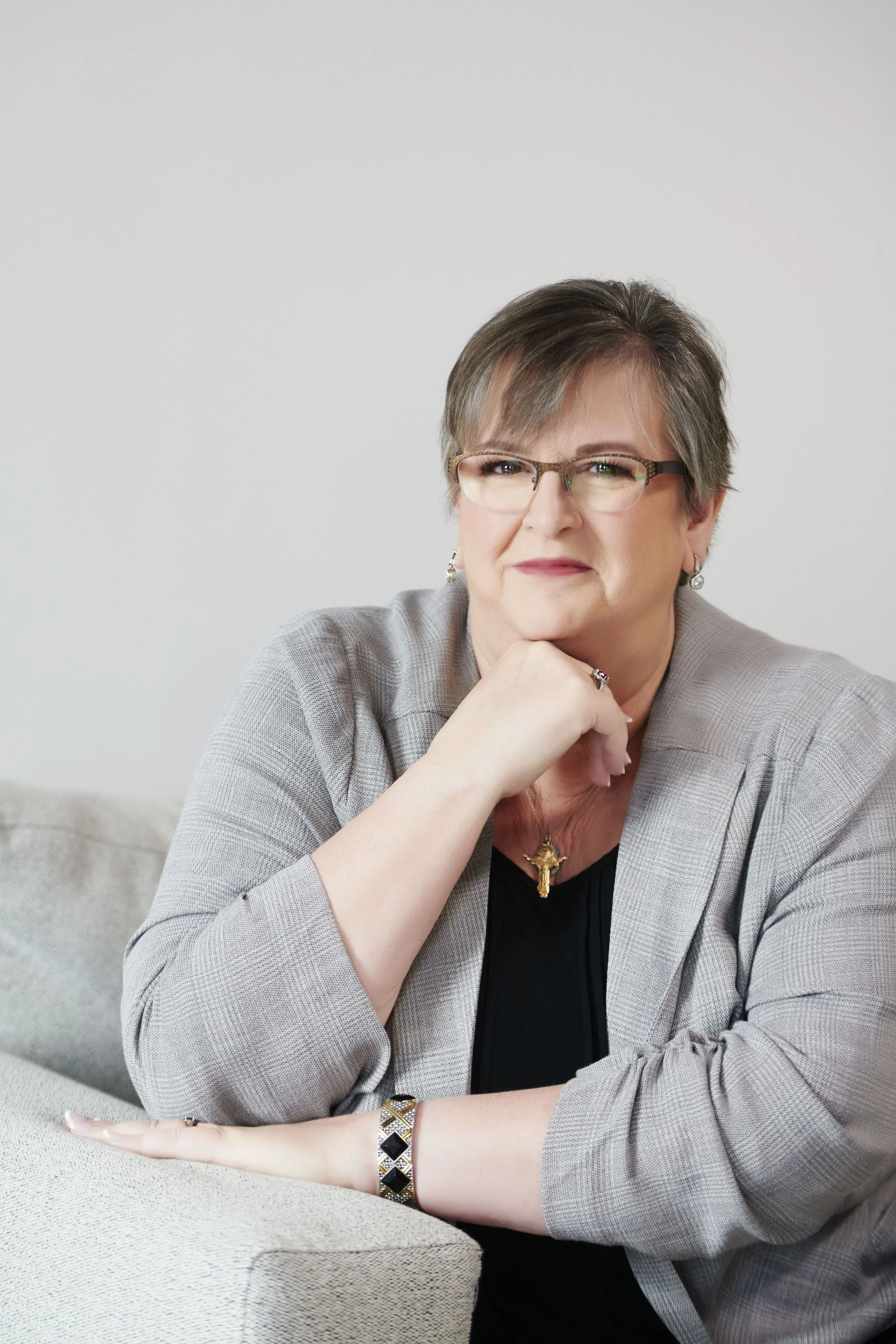
I come to this work as a counselor, coach, spiritual director, educator, and business owner. I also come as a wife, mother, grandmother, and person who has made meaningful decisions while holding responsibilities to family, work, ministry, health, and vocation.
My professional formation helps me recognize internal patterns, protective strategies, trauma responses, and polarizations that can be difficult to see from inside a decision. My formation in spiritual direction helps me honor mystery, conscience, freedom, and God's initiative. My years in business, parish life, formation, and family life keep the process grounded in the truth that discernment does not happen apart from real relationships, responsibilities, and limitations.
I will not tell you what decision to make. I will bring careful questions, an ability to notice what may be difficult to see alone, and a steady presence as we listen for what is true and what faithful movement may now be possible.
Discernment for Leaders and Organizations
I also offer customized discernment and decision-mapping consultation for leaders, teams, parishes, ministries, practices, and organizations. This work brings the same respect for human dignity, freedom, relationship, vocation, and real limits into a larger system.
Organizational discernment may be helpful when a team is facing competing priorities, leadership or staffing transitions, a new initiative, questions of mission and capacity, unclear roles, internal polarization, or too many individually good opportunities to pursue together.
As an autistic systems thinker, I often notice patterns, contradictions, dependencies, and downstream consequences that are difficult to see from inside a complex organization. My role is to help make those patterns visible without losing sight of the dignity and lived experience of the people within the system.
Organizational engagements are individually designed and priced according to scope.
What This Process Is and Is Not
Integrated Discernment is a coaching and consultation service. It is not psychotherapy and does not replace mental health treatment, spiritual direction, pastoral counsel, or professional legal or financial advice. It can complement those relationships, and you are welcome to bring what emerges into your ongoing therapy or spiritual direction.
This process may not be appropriate when a decision involves immediate safety, abuse, coercion, an acute mental health crisis, or circumstances requiring specialized professional advice. We will clarify fit before beginning.
You Do Not Need to Solve the Whole Decision Today
The first step is simply to become clearer about what you are actually discerning and what is happening within you as you approach it.
You may begin with the Discernment Foundation and decide afterward whether anything further would be helpful.
FAQs
-
Integrated Discernment was developed and is personally provided by Marion Bean Moreland through Trinitas. Trinitas supports the inquiry, scheduling, payment, and administrative process.
-
No. I will help you understand what is influencing the decision, identify the parts and values involved, consider practical realities, and recognize where greater freedom may be emerging. The decision remains yours.
-
No. You may begin with the Discernment Foundation and stop there. If further review or accompaniment would be helpful, you can add it one step at a time.
-
You may take whatever time you need to complete the personalized questions. Additional sessions can be spaced to allow time for reflection, prayer, conversation, and noticing what unfolds between meetings.
-
Yes. You may work with the questions independently, bring them into spiritual direction, or use them with another trusted person. There is no obligation to return for additional coaching.
-
No. Integrated Discernment is a coaching and consultation service. It is not clinical assessment, diagnosis, or mental health treatment. If concerns arise that would be better addressed in therapy or another professional relationship, we will discuss an appropriate next step.
-
The process is rooted in a Catholic Christian understanding of the person and is designed for people who want faith to be part of their discernment. Christians from other traditions are welcome when this approach fits what they are seeking.
-
Yes. Current clients may ask whether a focused discernment process can be incorporated appropriately into their existing work or should be structured separately.